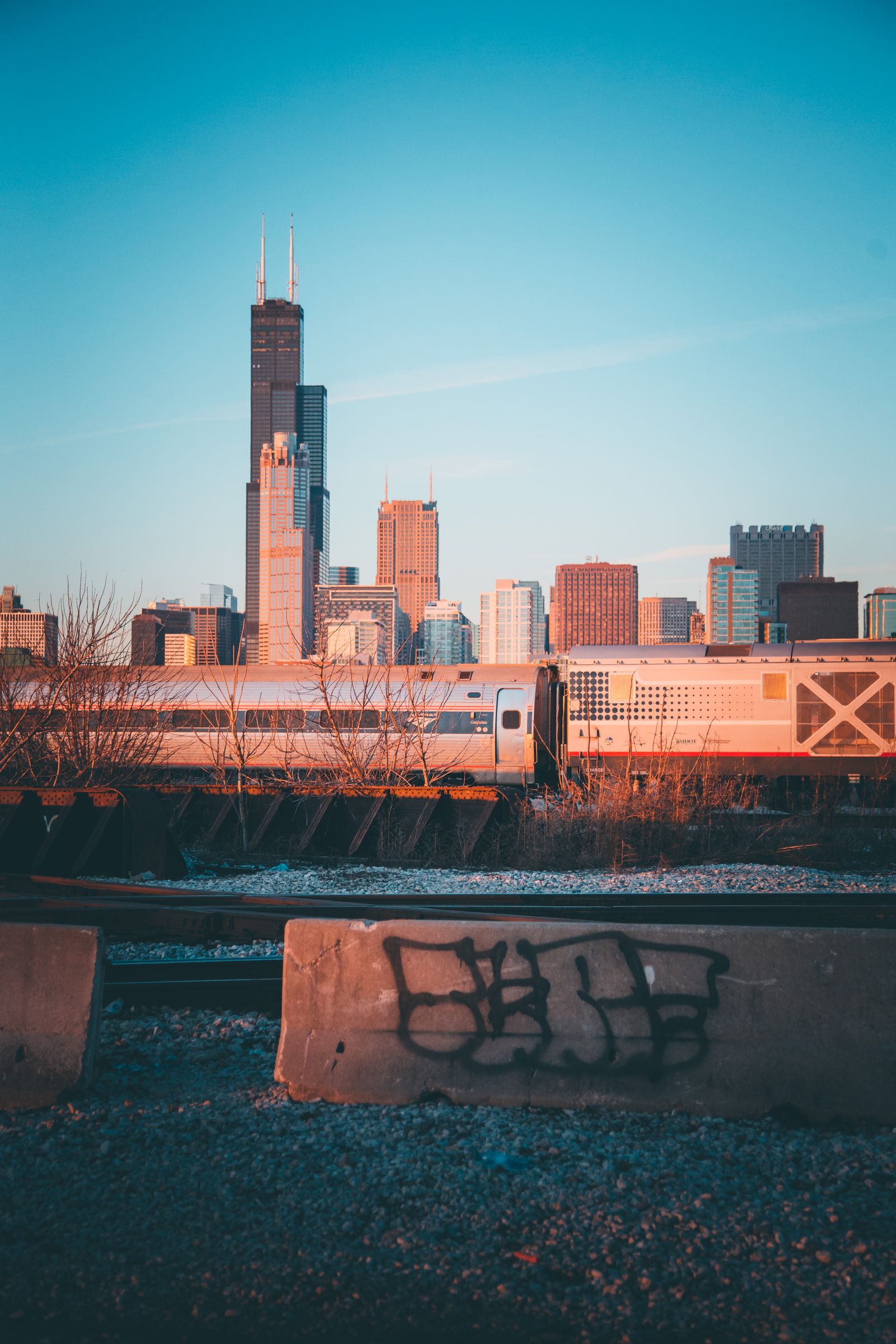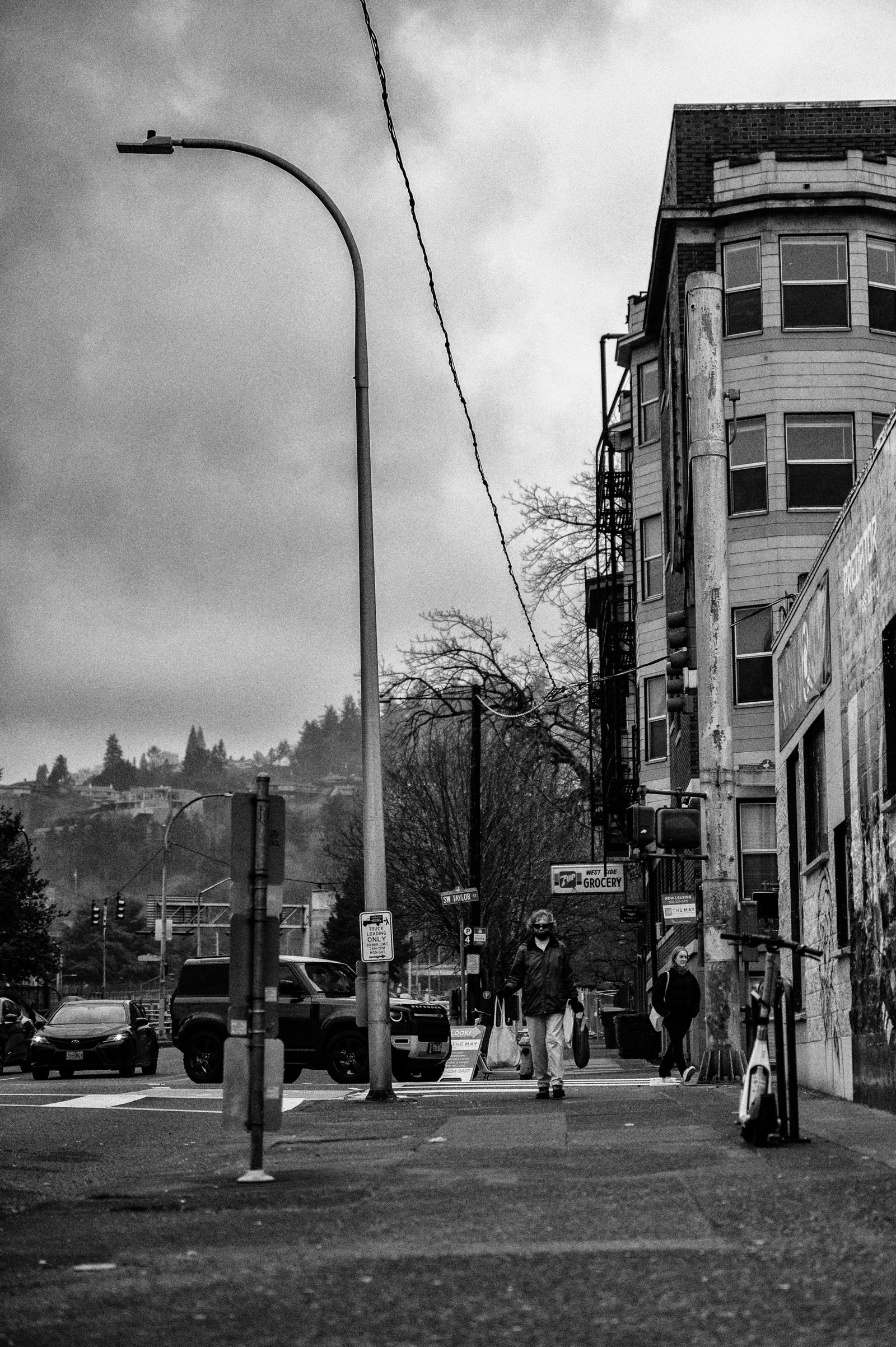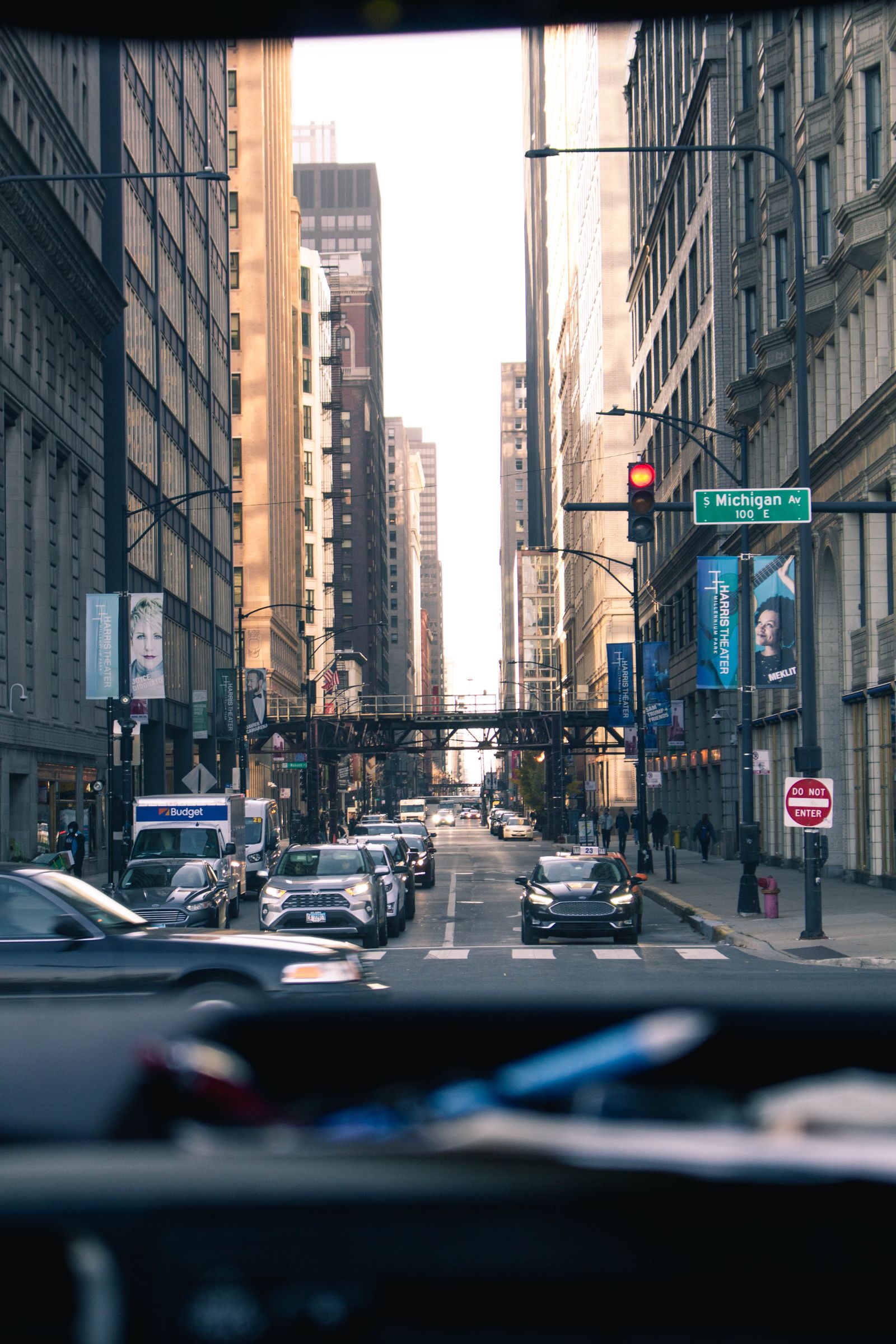
Architecture provides something relatively rare in photography: geometry that holds still. Lines, repetition, scale, and shadow are all built into a structure before a photographer ever arrives — the work is mostly a matter of finding the angle that makes that geometry legible.
Look for repetition
Windows, columns, railings, and stairs often repeat at regular intervals, and that repetition can carry a composition on its own, without needing a separate subject. Photographing a repeating pattern straight-on, or at a controlled angle, tends to emphasize this structure more clearly than a casual, off-angle shot.
Scale needs a point of reference
A building's true scale is often lost in a photograph unless something familiar — a person, a car, a doorway — is included for comparison. Without that reference point, even a genuinely massive structure can read as unremarkable in a photograph.
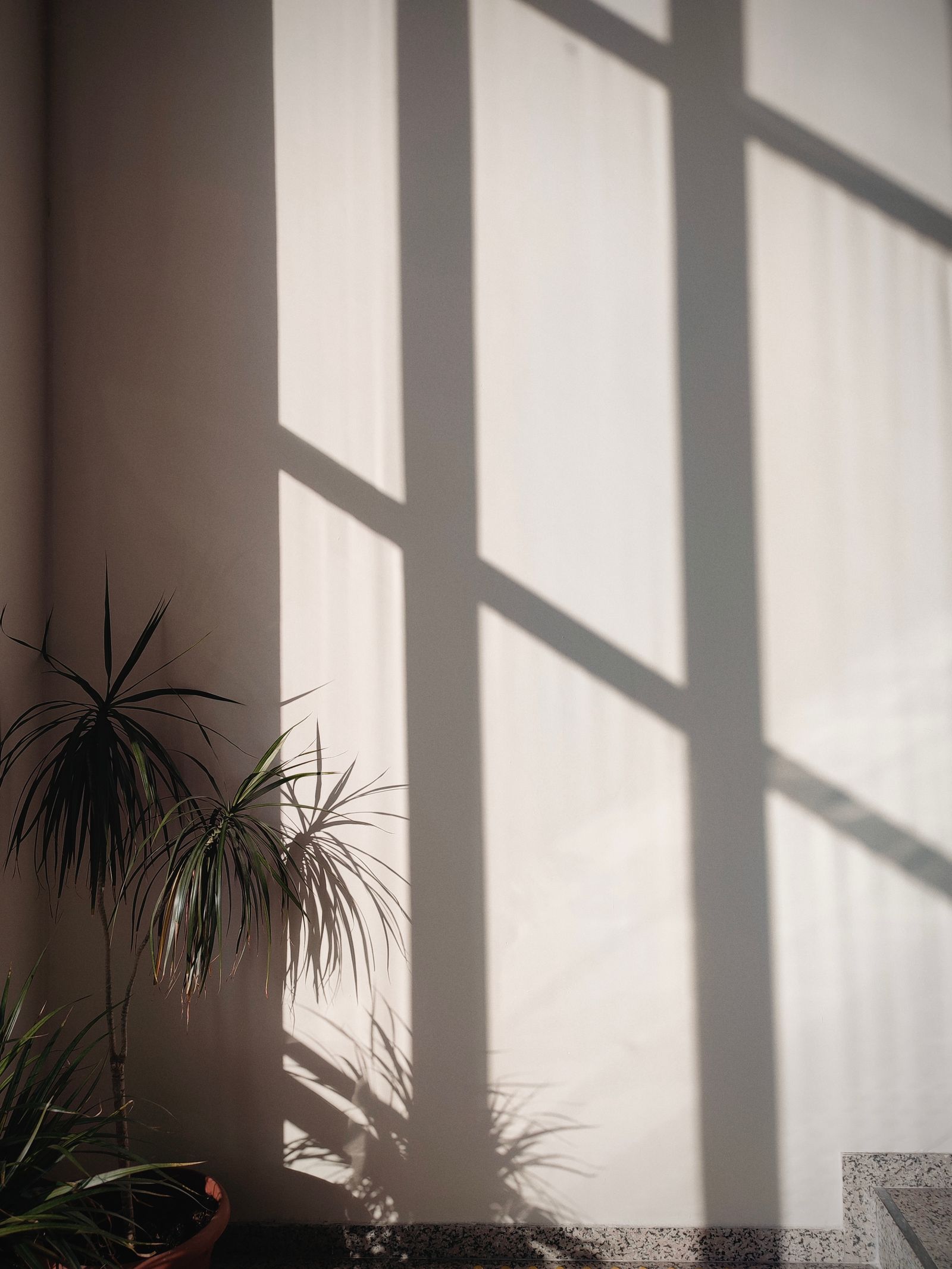
Shadows are part of the structure
The shadows a building casts, on itself and on the ground around it, are as much a part of its photographic character as its physical form. Returning to the same building at different times of day, to see how its shadows change, often reveals compositions that aren't visible at any single hour.